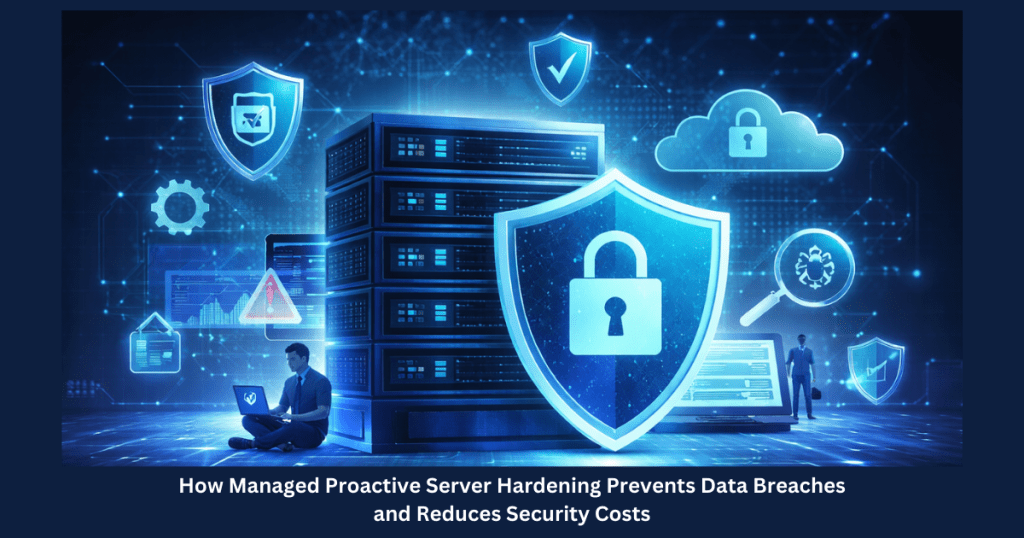
Managed proactive server hardening is one of the most effective ways to prevent data breaches, reduce cyber risk, and lower long-term security costs. By continuously securing servers through configuration management, vulnerability remediation, access control, and monitoring, organizations can eliminate common attack vectors before they are exploited. This approach is especially valuable for cloud, hybrid, and regulated environments where downtime, compliance failures, or breaches can result in severe financial and reputational damage.
Introduction
Data breaches are no longer rare events. They are a daily reality for businesses across industries.
According to IBM’s Cost of a Data Breach Report, the average cost of a data breach reached USD 4.45 million in 2023, the highest on record. Even more concerning? Over 80% of breaches involved misconfigured systems, unpatched servers, or weak access controls.
That’s where managed proactive server hardening comes in.
Instead of reacting to security incidents after damage is done, proactive hardening focuses on preventing breaches before they happen — while also reducing operational and security costs over time.
In this guide, we’ll break down:
- What proactive server hardening really means
- How it stops breaches at the source
- Why managed hardening is more cost-effective than reactive security
- Real-world examples across industries and regions
What Is Managed Proactive Server Hardening?
Managed proactive server hardening is the continuous process of securing servers by reducing their attack surface, enforcing security best practices, and actively maintaining hardened configurations through expert management.
It goes far beyond a one-time setup.
Core Elements of Server Hardening
A professionally managed hardening strategy typically includes:
- Secure OS baseline configurations (Linux / Windows)
- Removal of unnecessary services, packages, and ports
- Patch and vulnerability management
- Strong authentication and access controls
- Firewall and network-level protections
- Continuous monitoring and compliance checks
- Automated security audits and reporting
Unlike ad-hoc security fixes, proactive hardening is systematic, repeatable, and measurable.
Why Most Data Breaches Start at the Server Level
Despite investments in firewalls and endpoint security, servers remain the primary breach entry point.
Common Server-Related Breach Causes
- Unpatched operating systems
- Default credentials or weak SSH/RDP policies
- Open ports and unused services
- Misconfigured cloud security groups
- Excessive user privileges
- Lack of monitoring and alerting
Verizon’s Data Breach Investigations Report consistently shows that basic security hygiene failures account for the majority of successful attacks.
In simple terms: attackers don’t break in — they log in.
How Proactive Server Hardening Prevents Data Breaches
1. Reduces the Attack Surface
Every open port, running service, or unused package is a potential vulnerability.
Hardening ensures:
- Only essential services are running
- Unused protocols are disabled
- Default configurations are replaced with secure baselines
This dramatically limits what attackers can exploit.
2. Blocks Credential-Based Attacks

Over 60% of breaches involve compromised credentials.
Managed hardening enforces:
- SSH key-based authentication
- MFA for privileged access
- Role-based access control (RBAC)
- Privilege escalation monitoring
This prevents brute-force attacks, credential stuffing, and insider misuse.
3. Eliminates Known Vulnerabilities Before Exploitation
Unpatched systems are low-hanging fruit for attackers.
With managed proactive server hardening:
- Security patches are applied continuously
- CVEs are tracked and remediated
- Vulnerability scans are run regularly
This closes the window between vulnerability disclosure and exploitation — where most attacks occur.
4. Enforces Security Compliance Automatically
Many breaches happen due to non-compliance with security standards.
Hardening aligns servers with frameworks such as:
Hardening is incomplete without visibility.
- CIS Benchmarks
- ISO 27001
- PCI DSS
- HIPAA
- SOC 2
Automated compliance checks ensure deviations are caught early, not during audits or incidents.
5. Detects Threats Early Through Monitoring
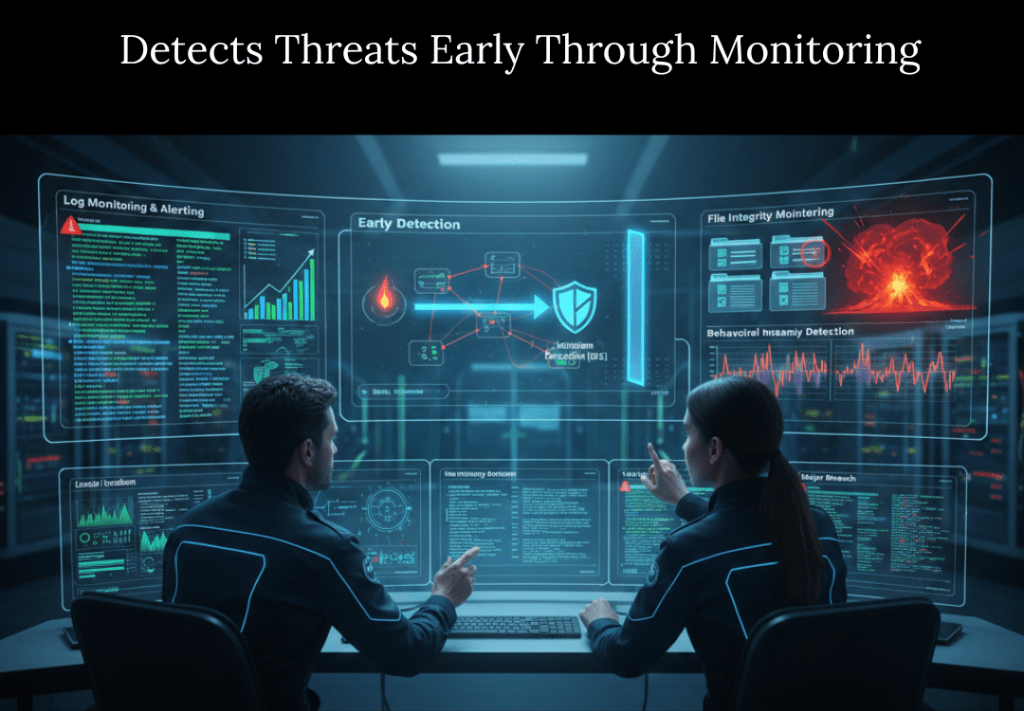
Managed environments include:
- Log monitoring and alerting
- Intrusion detection (IDS)
- File integrity monitoring
- Behavioral anomaly detection
Early detection prevents small incidents from becoming major breaches.
How Proactive Server Hardening Reduces Security Costs
Security isn’t just about protection — it’s about economics.
1. Breach Prevention Is Cheaper Than Breach Response
Let’s compare:
| Scenario | Average Cost |
| Proactive hardening (annual) | Low, predictable |
| Incident response | Very high |
| Data breach recovery | Millions |
| Compliance penalties | Variable but severe |
A single avoided breach can fund years of proactive hardening.
2. Lower Operational Overhead
Managed hardening reduces:
- Manual security work
- Emergency patching
- Downtime caused by incidents
- Burnout in internal IT teams
Your engineers focus on growth, not firefighting.
3. Reduced Cyber Insurance Premiums
Many insurers now assess:
- Patch management maturity
- Access controls
- Server hardening status
Organizations with hardened infrastructure often qualify for lower cyber insurance premiums.
4. Fewer Compliance and Audit Costs
Automated compliance reporting:
- Reduces audit preparation time
- Avoids last-minute remediation
- Minimizes risk of failed audits
This is critical for fintech, healthcare, SaaS, and e-commerce companies.
Real-World Examples Across Industries
Fintech (India, UAE, Europe)
Payment platforms handling cardholder data use proactive hardening to:
- Meet PCI DSS requirements
- Prevent lateral movement attacks
- Secure cloud-hosted EFT and payment switch systems
Result: Reduced fraud risk and uninterrupted transaction processing.
Healthcare (Middle East & Asia)
Hospitals and health-tech companies rely on hardened servers to:
- Protect patient data
- Meet HIPAA-like regulations
- Prevent ransomware attacks
Healthcare remains one of the most targeted sectors globally.
SaaS & Cloud-Native Companies (Global)
SaaS providers operating on AWS, Azure, or GCP benefit from:
- Hardened Linux images
- Secure Kubernetes worker nodes
- Continuous compliance enforcement
This builds customer trust and supports enterprise sales.
Why Managed Hardening Beats DIY Security
DIY hardening often fails because:
- Teams lack time or expertise
- Configurations drift over time
- Security isn’t continuously validated
Managed proactive server hardening provides:
- Dedicated security expertise
- 24/7 monitoring
- Standardized, auditable processes
- Rapid response without internal strain
It’s security as a service — predictable, scalable, and reliable.
Essential Security Insights: The Value of Proactive Server Hardening
- Managed proactive server hardening prevents breaches by eliminating common attack vectors.
- Most cyberattacks exploit misconfigurations, not zero-day vulnerabilities.
- Proactive security is significantly cheaper than reactive incident response.
- Continuous hardening supports compliance, insurance, and customer trust.
- It is especially critical for cloud, fintech, healthcare, and SaaS environments.
Conclusion
In today’s threat landscape, hoping your servers won’t be attacked is not a strategy.
Managed proactive server hardening turns security into a preventive discipline, not a reactive cost center. It protects your data, safeguards your reputation, and saves money over time.
Whether you operate in India, the Gulf, Europe, or globally, proactive hardening is no longer optional — it’s foundational.
Frequently Asked Questions
Managed proactive server hardening is a continuous security process that reduces server vulnerabilities through secure configurations, patching, access control, and monitoring managed by security experts. It removes common attack vectors such as open ports, weak credentials, unpatched software, and misconfigurations that attackers typically exploit. Yes. It is especially effective for AWS, Azure, and GCP environments where misconfigurations are a leading cause of breaches. Absolutely. It aligns systems with standards like CIS, ISO 27001, PCI DSS, and HIPAA, simplifying audits and reducing compliance risks. Yes. Preventing even one security incident can save far more than the annual cost of managed hardening services.1. What is managed proactive server hardening?
2. How does server hardening prevent data breaches?
3. Is proactive server hardening suitable for cloud environments?
4. Does server hardening help with compliance?
5. Is managed server hardening cost-effective for small businesses?