Table of Contents
Summary
Server security in 2026 requires a proactive, continuously monitored approach to defend against ransomware, DDoS attacks, and zero-day vulnerabilities. This guide explains modern server security best practices, including automated patch management, server hardening, firewall and WAF configuration, intrusion detection, and vulnerability scanning across cloud, hybrid, and on-prem environments. It also outlines cloud security responsibilities for AWS and Azure and shows how managed server security services with 24×7 monitoring and incident response help businesses reduce risk, maintain uptime, and meet compliance expectations.
Introduction
Cyber threats in 2026 are more sophisticated, automated, and persistent than ever before. With the rise of AI-driven attacks, ransomware-as-a-service, and zero-day exploits, businesses can no longer rely on basic security measures to protect their servers.
Server security is no longer optional—it is a business necessity. Whether your infrastructure runs on cloud platforms like AWS and Azure, a hybrid environment, or traditional on-premise servers, attackers target misconfigurations, outdated software, and weak access controls relentlessly.
In this guide, we explore the top server security best practices for 2026 to help businesses protect critical data, maintain uptime, and stay compliant in an increasingly hostile digital landscape.
Why Server Security Is Critical for Businesses in 2026
Servers are the backbone of modern businesses. A single breach or outage can trigger a chain reaction of financial loss, reputational damage, and regulatory consequences.
Downtime caused by ransomware or DDoS attacks can halt operations for hours or days. Data breaches can expose customer information, intellectual property, and financial records. For many businesses, the cost of recovery far exceeds the cost of prevention.
Growing Cyber Threat Landscape
Cybercriminals are evolving faster than traditional security strategies.
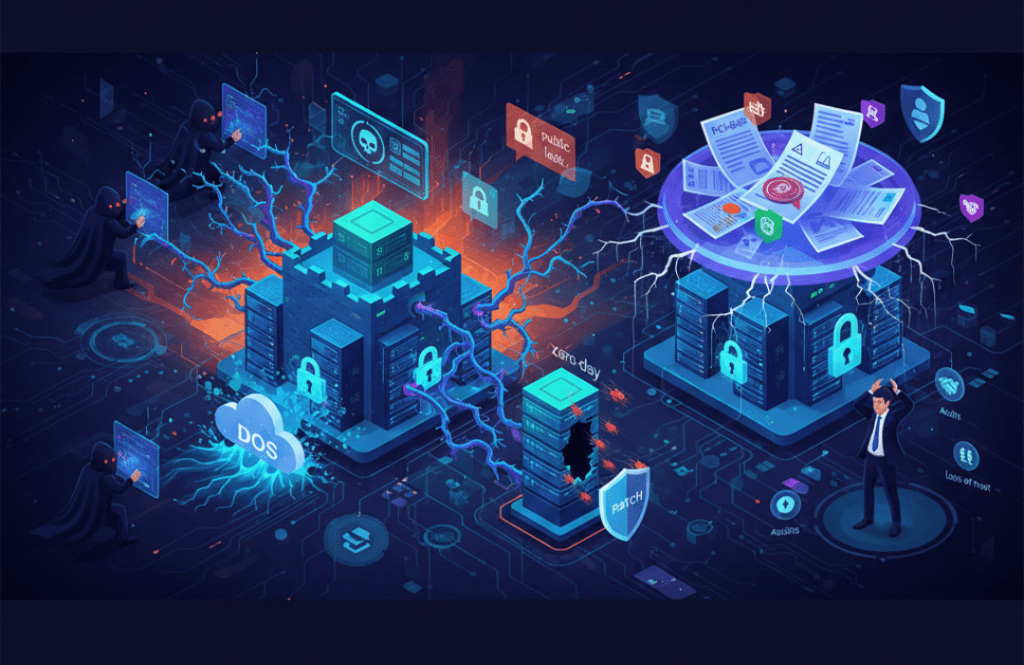
- Ransomware attacks now use double and triple extortion methods, encrypting data while threatening public leaks.
- DDoS attacks have become more frequent and powerful, targeting application layers and cloud resources.
- Zero-day vulnerabilities are exploited before vendors release patches, making unprepared servers easy targets.
Compliance and Regulatory Pressure
Businesses must also navigate growing regulatory requirements. Standards like PCI-DSS, GDPR, and HIPAA impose strict expectations around data protection, access control, and monitoring. Failure to secure servers adequately can result in audits, penalties, and loss of customer trust.
Common Server Security Threats Businesses Face
Understanding the most common threats helps organizations prioritize their security efforts.
- Malware and ransomware attacks that encrypt or steal data
- Unauthorized access due to weak passwords or exposed services
- Unpatched software vulnerabilities exploited by automated bots
- DDoS and brute-force attacks targeting availability and credentials
These threats affect cloud servers, VPS, dedicated servers, and hybrid environments alike.
Server Security Best Practices for 2026
This section forms the core of a strong server security strategy in 2026.
Proactive Patch Management
Outdated systems remain one of the most exploited attack vectors.
- Regularly update operating systems, kernels, and applications
- Apply security patches as soon as they are released
- Use automated patch management to reduce human error and delays
Proactive patching significantly reduces exposure to known vulnerabilities.
Server Hardening Best Practices
Server hardening minimizes the attack surface.
- Disable unused services, ports, and packages
- Secure SSH and RDP access using key-based authentication and IP restrictions
- Enforce the principle of least privilege for users and applications
A hardened server is far more resilient against brute-force and privilege escalation attacks.
Firewall and Network Security Configuration
Firewalls remain a foundational layer of server security.
- Configure host-based server firewalls (iptables, nftables, Windows Firewall)
- Deploy a Web Application Firewall (WAF) to protect against application-layer attacks
- Use network segmentation to isolate critical workloads
Proper network security prevents lateral movement after an initial compromise.
Continuous Monitoring and Intrusion Detection
Reactive security is no longer sufficient in 2026.
- Deploy IDS/IPS systems to detect malicious behavior
- Monitor logs for unusual login attempts, file changes, and traffic patterns
- Set up real-time alerts for faster response
Continuous monitoring enables early detection before damage escalates.
Regular Security Audits and Vulnerability Scanning
Security is not a one-time task.
- Perform regular vulnerability scans to identify weaknesses
- Audit server configurations for misconfigurations and policy violations
- Address gaps before attackers exploit them
Routine audits help prevent zero-day exploitation and compliance failures.
Cloud Server Security Best Practices (AWS, Azure & Hybrid)
Cloud environments introduce flexibility—but also shared responsibility.
- Understand the shared responsibility model for AWS and Azure
- Implement strong IAM policies, MFA, and role-based access control
- Maintain regular backups and disaster recovery plans
- Leverage cloud-native security tools like Azure Security Center and AWS GuardDuty
Hybrid environments require consistent security controls across cloud and on-prem systems.
Why Managed Server Security Services Matter
Managing server security internally is challenging, resource-intensive, and expensive—especially as threats grow more complex.
24×7 Server Monitoring and Incident Response
Security incidents don’t follow business hours.
- Continuous monitoring ensures faster threat detection
- Immediate response minimizes damage and downtime
- Proactive alerts prevent small issues from becoming major breaches
Expertise, Tools, and Cost Efficiency
Managed services provide access to:
- Dedicated server security experts
- Enterprise-grade monitoring and protection tools
- Predictable monthly costs without hiring overhead
This makes enterprise-level security achievable for businesses of all sizes.
How 24×7 Server Management Helps Secure Your Infrastructure
At 24×7 Server Management, we take a proactive approach to server security. Our services include continuous monitoring, proactive patching, server hardening, firewall management, and rapid incident response across cloud, hybrid, and on-prem environments.
We focus on preventing security incidents—not just reacting to them. Our experts work around the clock to keep your infrastructure secure, compliant, and optimized.
Contact us today for a free consultation and discover how we can strengthen your server security posture in 2026.
Final Thoughts
Server security in 2026 requires a proactive, layered, and continuously monitored approach. With evolving cyber threats, increasing compliance pressure, and growing reliance on digital infrastructure, businesses must act before incidents occur—not after.
By implementing modern server security best practices and partnering with a trusted managed service provider, organizations can protect their data, maintain uptime, and focus on growth with confidence.
Frequently Asked Questions
Server security refers to the practices and tools used to protect servers from cyber threats, unauthorized access, and data breaches. Because cyber threats are more advanced in 2026, strong server security helps prevent ransomware, downtime, and compliance violations. Common threats include malware, ransomware, DDoS attacks, unpatched vulnerabilities, and unauthorized access. Servers should be patched regularly, ideally through automated patch management, to reduce exposure to known vulnerabilities. Yes, managed server security services provide 24×7 monitoring, proactive threat detection, and expert incident response.Q1. What is server security?
Q2. Why are server security best practices important in 2026?
Q3. What are the most common server security threats?
Q4. How often should servers be patched?
Q5. Can managed server security services help businesses?